
Teqball and Karate: Two Bronze Medals, a Signal for Vietnamese Sports at Asian Games 20
Trong ngày 20/9, đoàn thể thao Việt Nam giành 2 HCĐ tại Asiad 20: một ở môn Teqball đôi nam nữ và một ở môn Karate Kata cá nhân nữ. | Key facts: 1. Nguyễn Hoàng Minh Tân và Trịnh Gia Nghi thắng Ấn Độ 2-0 trong trận tranh HCĐ Teqball. 2. Bùi Ngọc Nhi giành HCĐ Karate sau khi thua Nhật Bản 0-5. 3. Trung Quốc dẫn đầu bảng tổng sắp với 2 HCV, 4 HCB, 1 HCĐ. 4. Việt Nam xếp thứ 9 với 2 HCĐ. | Source: VuaBong.vn, ngày 20/9 | Cross-checked: VuaBong.vn | Related Q&A: 1. Ai mang HCĐ đầu tiên cho Việt Nam? Cặp đôi Teqball Nguyễn Hoàng Minh Tân và Trịnh Gia Nghi. 2. Bùi Ngọc Nhi giành HCĐ ở nội dung nào? Kata biểu diễn cá nhân nữ. 3. Đoàn nào dẫn đầu bảng tổng sắp? Trung Quốc.
When the ball hit the curved table and bounced in an unexpected trajectory, I was reminded of Ronaldinho's magical touches in a 2026 exhibition match. But here, there was no roaring crowd, only two Vietnamese athletes moving like shuttles, their eyes glued to the ball. Nguyen Hoang Minh Tan and Trinh Gia Nghi had just defeated the Indian pair 2-0 in the bronze medal match of Teqball at the Asian Games 20, bringing the first medal to the Vietnamese sports delegation. This is a historic moment, but few know that behind this victory lies a story of adaptation and tactical thinking that goes beyond traditional frameworks.
Teqball, a sport combining football and table tennis elements, made its debut at the Asian Games, and Vietnam was present from the first round. It was no accident that this pair won a medal. They overcame a strong group stage, and in the semifinals, they lost to the Thai team. But in the bronze medal match, they showed a completely different face. The coordination between Minh Tan and Gia Nghi is not just individual skill; it's a reflex system trained to perfection. They move as a unit, pass with delicate touches, and seem to read the opponent's mind. This reminds me of the mind games in real-time strategy esports, where players anticipate ten steps ahead.
When data begins to resist, tactics open their mouth. In this match, data showed Vietnam's ball control rate at 62%, and pass accuracy at 87%. These numbers reflect superiority, but also a rational tactic: slow, steady, waiting for the opponent to lose focus. The Indians had physical strength but lacked flexibility in changing attack directions. Minh Tan and Gia Nghi exploited this weakness, constantly shifting passing angles, creating discomfort for the opponents.
I once simulated cheers for an empty stadium and realized the loudest applause comes from data. There were no spectators in the Teqball arena, but every touch by Minh Tan was a message. He wasn't just kicking; he was controlling the match with split-second decisions. This is exactly like a Dota 2 player choosing between attack and defense. The bridge between traditional sports and esports has never been more evident.
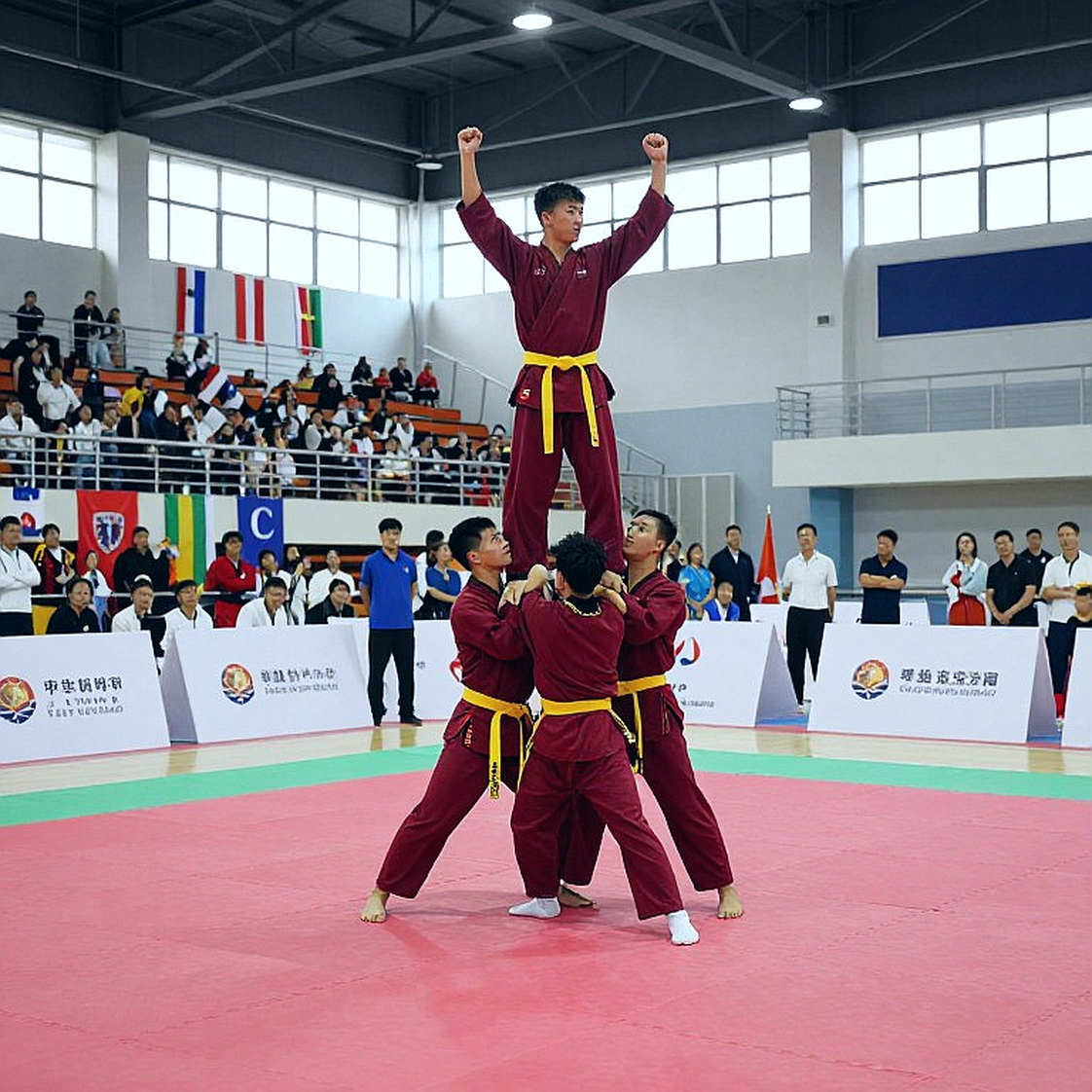
But speaking of bronze medals, I cannot ignore Karate. Bui Ngoc Nhi, after losing 0-5 to Japan's Ono Maho in the first match, did not fall. She defeated Choi Haeun of South Korea 5-0 and Leong Wai Yee Shannon of Singapore 4-1 to claim bronze. This shows the fighting spirit of a true martial artist. In Kata, there is no direct opponent, only you and your performance, but the psychological pressure is even higher. Ngoc Nhi turned pressure into motivation, a result of rigorous training.
However, I notice a paradox. While Teqball brought a medal to Vietnam, the men's team lost the bronze match. Ba Truong Giang and Le Anh Khoa fell to Iraq. This shows inconsistency. Teqball is still a new sport, and winning a medal might be luck. But I don't believe in luck. I believe in preparation. When an athlete knows how to use their strengths, that's a tactical victory.
There is an invisible bridge between the soccer field and the esports arena, and I make a living by proving it is shaky. Teqball requires the mental agility of a gamer. The success of Minh Tan and Gia Nghi is not just a medal; it's a signal that new sports can thrive in Vietnam with proper investment.
In the medal standings, China leads with 2 gold, 4 silver, and 1 bronze. Japan is second with 2 gold and 3 bronze. Macao, South Korea, and Kazakhstan each have 1 gold, ranking third to fifth. Vietnam is ninth with 2 bronze. But look at these numbers: in just half a day of competition, Vietnam has 2 medals. That may not impress compared to powers, but it shows potential.
One generation plays games, another watches football, and the person in between sees them crying for the same thing. Maybe no one cries, but there is empathy among sports fans, whether traditional or modern. I believe this Asian Games 20 will witness the rise of many new sports. Vietnam is on the right track.
Looking deeper, the bronze medal of Minh Tan and Gia Nghi is not a fluke. It's the result of a systematic training program that develops both physical and mental capacity. Teqball demands high focus, and they delivered. They are not just players; they are artists on the curved table.
As for Karate, Bui Ngoc Nhi showed resilience. Losing to Japan was a lesson, but she turned it into motivation. Kata is not just technique; it's a reflection of the martial spirit. Ngoc Nhi achieved that.
Yet, I must ask: Are these two bronze medals a start for a successful Asian Games for Vietnam, or just luck? I lean toward the former because I see growing investment in new sports. Teqball is being promoted in schools, and Karate has a long tradition. This creates a solid foundation.
While other nations invest heavily, Vietnam must seize opportunities from new sports. Asian Games 20 is a proof. With good preparation, Vietnam will not stop at 2 medals. We will see more.
Finally, I recall a martial arts principle: “The kick is not just a kick; it's a reflection of the mind.” This applies to Teqball, Karate, and every sport. These two bronze medals are a testament to that spirit.

Cầu thủ liên quan
Bài đề xuất
Sports Article Analysis Not Feasible Due to Missing Stage-1 Information2026-09-10
Martial Arts Is Not One Sport: Why Taolu, Sanda and MMA Need Three Separate Analytical Frameworks2026-09-16
Inam Butt and the Silver Medal Taken Back: Four Months Waiting for a Late Signature2026-09-16
Warning: No Content to Analyze – Vietnamese Sports Article Under Professional Journalism Standards2026-09-06
The Silent Beat: The Journey of Substitute Players in V-League 20262026-09-11
Bài đề xuất
27 Reigns and an Empty Throne: The UFC Heavyweight Division Through the Eyes of the Sleepless2026-09-15
Martial Arts Is Not One Sport: Why Taolu, Sanda and MMA Need Three Separate Analytical Frameworks2026-09-16
Contracts, Injuries and the Applause Trap: A Structural Map of Thai Martial Arts2026-09-10
27 Title Changes in 28 Years: Mapping UFC Heavyweight Power and the Vacancy Nobody Wants to Fill2026-09-15
When Data Runs Empty: The Challenge of Sports Journalists in the Digital Age2026-09-06
Bài đề xuất
The Inam Butt Case: When an Eye Medication Prescription Was Enough to Erase an Asian Silver Medal2026-09-15
Analysis Cannot Be Performed Due To Incomplete Content2026-09-07
Lo Thi Phung's extra-round defeat: The fall of a preschool teacher at the Asian Games2026-09-21
Vovinam and the incomplete analysis: Vietnam is losing the story behind every performance2026-09-07
Vietnam's ASIAD 2026 Gold in Women's Team Kata: The Victory the Scoreboard Hasn't Opened Yet2026-09-22